Choosing medical instruments is not a simple comparison of prices or polished product photographs. The World Health Organization’s Global Atlas of Medical Devices reports roughly two million types of medical devices, grouped into more than 7,000 categories. That scale makes careful evaluation essential. A reliable instrument must suit its intended clinical task, user, and care environment.
So, what are the key features of high quality medical instruments? Start with documented performance, consistent manufacturing, clear instructions, and materials suited to repeated use or the stated single-use purpose. Check how the device handles cleaning, sterilization, calibration, and routine maintenance. A surgical instrument should feel balanced in the hand, with a secure grip and smooth, dependable movement. A monitor should display readable results and provide clear alerts. Small details matter. They affect daily work.
Quality also depends on evidence and support, not appearance alone. The U.S. Food and Drug Administration’s Quality Management System Regulation, published in 2024 and effective from February 2, 2026, aligns U.S. requirements more closely with ISO 13485. This underscores the value of controlled design and manufacturing processes. Ask suppliers for current technical documentation, service arrangements, and traceability information. Confirm that claims match the device’s intended use and your facility’s needs. No checklist removes judgment. WHO and FDA sources provide useful context, but they do not rank individual products. Comparing evidence carefully—and noting what remains uncertain—helps buyers make more defensible choices.
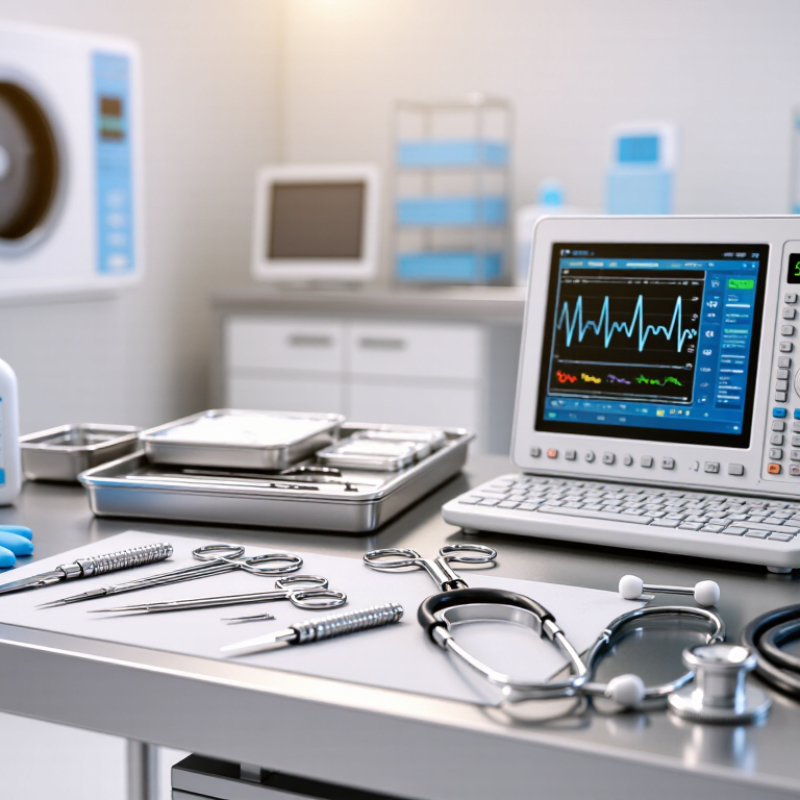
Start with the clinical task, not the catalog. Define the procedure, patient group, care setting, and expected frequency of use. A fine-tipped instrument may suit delicate work but prove awkward with gloves or limited visibility. Check required precision, grip, weight, reach, and compatibility with other equipment. Fit matters. Ask clinicians to handle representative samples in realistic conditions, then record what feels secure and what does not. A specification sheet rarely captures the small frustrations of a long shift.
Intended use also determines cleaning, sterilization, storage, and maintenance needs. Reusable instruments must tolerate the facility’s actual reprocessing methods; single-use instruments need a clear plan for supply and disposal.
The World Health Organization’s Global Report on Infection Prevention and Control (2022) estimates that 7 in 100 patients in high-income acute-care hospitals, and 15 in 100 in low- and middle-income settings, acquire at least one healthcare-associated infection during their stay. These figures do not mean an instrument caused an infection. They do underline why reprocessing requirements belong in the selection discussion.
Confirm the instrument’s intended use and care instructions, and involve infection-prevention and biomedical staff. One gap remains easy to miss: training time. Even a capable instrument can be a poor choice if staff cannot use or maintain it consistently.
Define the procedure, patient group, care setting, and expected frequency of use. Check precision, grip, weight, reach, and equipment compatibility. Test a sample with gloves in realistic conditions.
Intended use shapes cleaning, sterilization, storage, and maintenance needs. Reusable tools must tolerate the facility’s reprocessing methods. Single-use tools need a supply and disposal plan.
Review the stated tolerance, calibration records, and instructions. When practical, compare readings with a traceable reference or test object. Repeat the check. Small differences matter.
Ask staff to read the display under bright lights and adjust controls while wearing gloves. Check setup time, grip, and alert clarity. Real use can feel different.
Use bright light and magnification. Check tips, joints, and surfaces for misalignment, rough movement, pits, burrs, or discoloration. Open and close hinged tools several times.
Flush the lumen with water and confirm that flow is unobstructed. Also review cleaning and sterilization instructions. A polished surface proves little.
Ask for material specifications, traceability records, care instructions, and evidence supporting validated cleaning and sterilization guidance. Compare the sample with written acceptance criteria.
Include clinical, infection-prevention, biomedical, and sterile-processing staff where relevant. Record what fails during realistic workflows. A checklist helps, but it can miss things.
Staff need time to learn consistent use and maintenance. Even a capable instrument may be a poor fit without that support. Easy to overlook.
Choosing high-quality medical instruments begins with a clear understanding of clinical needs, the procedures they will support, and the environment in which they will be used. Buyers should verify that instruments meet relevant regulatory requirements and recognized quality standards, then assess their accuracy, safety, durability, and ease of use. Asking “what are the key features of high quality medical instruments” helps focus the evaluation on reliable performance, consistent results, ergonomic design, and suitability for the intended users and patients.
Supplier reliability and the full cost of ownership also matter. Consider product documentation, staff training, maintenance, warranties, availability of support, and expected service life—not just the initial purchase price. Before committing, inspect samples or units for workmanship, functionality, and compatibility with clinical workflows, and validate their performance under appropriate conditions. A careful, needs-based selection process can help healthcare teams choose instruments that support dependable care and remain practical throughout their useful life.

 FoysMed Solutions