How to Choose Durable and Reliable Medical Tools from China?

Time:2026-11-12 Author:Sienna
0%

Choosing medical tools from China requires more than comparing prices or browsing polished product photos. A stainless-steel instrument may look robust, yet its finish, joint alignment, and resistance to repeated cleaning matter in daily use. Details matter. Buyers should examine material specifications, manufacturing records, inspection procedures, and traceability information before placing an order. These records help show how a product is made and how problems can be investigated.

This guide explains how to choose durable and reliable medical tools by assessing product design, supplier capability, sample quality, and after-sales support. It also considers whether documentation and product claims match the intended use and the requirements of the destination market. Ask for clear test reports, confirm that certificates apply to the exact product, and involve qualified clinical or biomedical staff when evaluating performance. Where possible, inspect samples under realistic handling and cleaning conditions. A catalog cannot tell you everything.

No checklist guarantees a dependable purchase. Supplier responses may be incomplete, and a single sample may not represent every production batch. That is worth acknowledging. Buyers can reduce uncertainty by checking references, clarifying warranty terms, and agreeing on inspection criteria before production. Careful questions and verifiable evidence offer a stronger basis for selection than confident sales language alone.
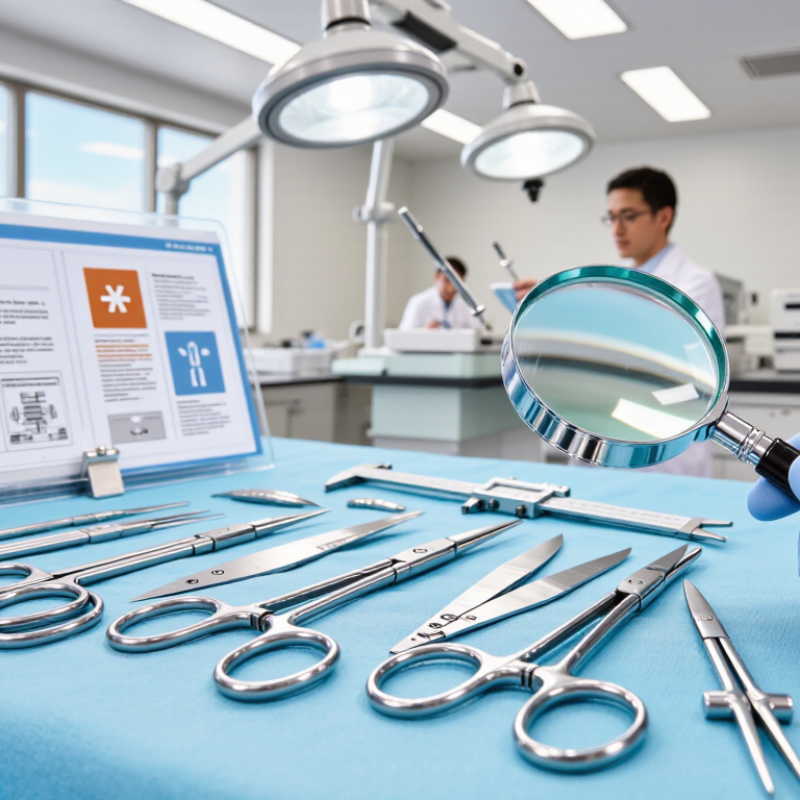
How to Choose Durable and Reliable Medical Tools from China?

Define Clinical Needs and Performance Requirements

Start with the clinical task, not a product catalog. Will the tool be used at a bedside, in a procedure room, or during transport? A thermometer used across busy wards faces different demands from one kept in a controlled clinic. Identify the intended users, patient groups, frequency of use, and cleaning routine. Be specific.

Turn those needs into measurable requirements. For a measuring device, define the required range, accuracy, response time, and display readability. For an instrument used repeatedly, consider grip comfort, moving-part wear, and compatibility with the facility’s cleaning or sterilization process. Check what consumables it needs and whether replacements can be obtained reliably. Performance claims should be supported by test records, clear instructions, and traceable quality documentation—not just a polished product page.

A specification can look complete on paper and still miss a practical problem. A small display may be hard to read under bright lights; a sturdy handle may become slippery with gloves. Ask clinical staff to review samples or trial units in realistic conditions, then record their feedback. The first draft may be imperfect. Revise it when actual use reveals overlooked needs, and share the final requirements with prospective manufacturers in China for a clear, comparable quotation.

How to Choose Durable and Reliable Medical Tools from China?

Define clinical needs and performance requirements before comparing suppliers.

Example planning ratings only—not measured product data. Rate each requirement from 1 (lower priority) to 5 (critical) for the intended use. Specify measurable acceptance criteria and verify applicable safety, quality, usability, and reprocessing requirements.

Verify Manufacturer Credentials and Regulatory Compliance

When evaluating a Chinese medical-tool manufacturer, match its legal business name and factory address across its business license, quality certificate, and product records. Check that the certificate covers the actual manufacturing site and product category, not merely a trading office. For products marketed in China, verify applicable registration or filing details through the National Medical Products Administration. For exports, confirm requirements in the destination market; they vary by device type and intended use.

Look closely. A certificate scan is not proof by itself. Confirm its status with the issuing certification body, then compare the model number, scope, and validity dates. ISO’s 2022 survey reported 36,907 valid ISO 13485 certificates worldwide, a useful measure of the standard’s reach—not proof that any single supplier is dependable. The World Health Organization’s Global Model Regulatory Framework for Medical Devices emphasizes controls such as registration, inspection, and post-market surveillance. Ask for traceable inspection records, complaint-handling procedures, and recent audit findings. A neat document pack can still leave gaps; I would flag mismatched addresses or vague scope wording and request clarification before placing an order.

Assess Materials, Design, and Manufacturing Quality

When sourcing medical tools from China, assess the material before judging the finish. Request material specifications and batch-level traceability, then compare them with the tool’s intended use and cleaning process. A smooth handle can still hide a weak joint. Look closely. Check edges, hinges, welds, and moving parts under bright light; ask how the manufacturer controls dimensions and inspects finished batches. ISO 13485:2016 provides a quality-management framework for medical-device production, but certification alone does not prove that a specific tool will last.

Independent evidence matters. A 2017 review cited by WHO examined 100 studies and about 48,000 samples, estimating that 10.5% of medical products in low- and middle-income countries were substandard or falsified. This figure covers many product types and is not specific to Chinese tools. It is a reason to verify, not to assume.

Ask for inspection records, material certificates, and test results tied to the product and batch you plan to buy. Where relevant, request evidence of repeated-use or corrosion testing. I would not treat a polished sample as proof of consistent production; that is an easy mistake. Check whether documented controls cover incoming materials, assembly, and final inspection, and clarify what happens when a batch fails.

Review Testing Records and Product Traceability

Durability is not proven by a polished catalogue or a heavy metal handle. Ask for test records tied to the exact model and production lot you plan to purchase. Check the test date, sample size, method, and acceptance criteria. A report that says “passed” without these details leaves important questions unanswered. Look closer.

For reusable instruments, records may cover repeated cleaning, corrosion resistance, joint movement, and surface inspection. For powered tools, review electrical safety and performance results under stated operating conditions. Confirm that the test equipment was calibrated when measurements were taken. If a document lists only a product family, ask how the tested configuration matches the delivered tool. Small differences in coatings, materials, or assembly can matter.

Traceability should continue beyond the test report. Request a lot number on the packaging and a matching record that identifies production and inspection dates. Check whether the supplier can connect that lot to material certificates, inspection results, and any relevant processing records. Keep a sample carton label and compare it with the shipping documents. It is a simple check, but easy to skip. Records can look complete while a date or model code does not match; pause and ask for clarification before approving the shipment.

Compare Samples, Warranty Terms, and Supplier Support

Request samples before placing a large order. Test them under realistic conditions: repeated grip, cleaning, assembly, and storage. Check joints for looseness and edges for rough finishing. Compare the sample with the written specification, not just the catalog photo. Keep a dated inspection sheet and record any mismatch. Small flaws matter.

Warranty terms deserve the same scrutiny. Ask what the warranty covers, when it begins, who pays shipping, and how replacement parts are supplied. WHO’s 2010 report, Medical Devices: Managing the Mismatch, notes that donated equipment can account for up to 80% in some countries, sometimes without suitable support. The lesson applies to purchased tools too: a sound product is less useful when parts or service are unavailable. Get response times and repair procedures in writing. Vague promises are not support.

Test the supplier’s support before committing. Send a specific question about a sample’s cleaning instructions or a replacement part, then note how quickly and clearly they respond. Request an English service manual, spare-parts list, and named technical contact. Keep records. I would still allow room for doubt: one good sample cannot prove consistent production. Use a pre-shipment inspection plan, and compare later batches against the approved sample.

FAQS

What should I define before requesting quotes for medical tools?

Describe the clinical task, location, users, patient groups, and cleaning routine. Set measurable requirements for range, accuracy, response time, and readability.

Why should clinical staff review a sample tool?

Real conditions reveal problems that specifications may miss. A small display can be hard to read under bright lights, while a handle may slip with gloves. Check closely.

What should I inspect on a tool’s materials and construction?

Review material specifications and batch traceability. Examine edges, hinges, welds, joints, and moving parts under bright light.

Does quality certification prove that every tool will last?

No. A quality-management certificate shows a framework, not the durability of a specific tool or batch. I would not rely on the certificate alone.

What details should a durability test report include?

Check the model, production lot, test date, sample size, method, and acceptance criteria. “Passed” alone is not enough.

What tests matter for reusable or powered tools?

Reusable instruments may need records for cleaning cycles, corrosion, joint movement, and surface condition. Powered tools need electrical safety and performance results under stated conditions.

How can I confirm that test results match the delivered tools?

Compare the tested configuration with the delivered model. Check materials, coatings, and assembly details. Small differences can matter.

How can I check product traceability before shipment?

Match the packaging lot number with production and inspection records. Compare a carton label with shipping documents, and ask about any mismatch. A simple check.

Conclusion

Choosing the right medical tools begins with a clear understanding of clinical needs, expected performance, frequency of use, and compatibility with existing procedures. These requirements help buyers compare products on practical criteria rather than price alone. To understand how to choose durable and reliable medical tools, review each manufacturer’s credentials and relevant regulatory documentation, then examine the materials, design, and manufacturing processes used to support consistent quality.

Before making a decision, review available testing records and traceability information to understand how products are inspected and identified. Request samples when possible to assess handling, finish, and suitability for intended use. Finally, compare warranty terms and the supplier’s approach to technical questions, replacement requests, and ongoing support. Considering these factors together helps buyers make a measured choice and set clearer expectations for product quality and service.

Sienna

Sienna

Sienna is a skilled marketing professional with a deep expertise in our company’s core products and services. With a passion for innovation and detail, she plays a pivotal role in crafting insightful blog posts that not only highlight the unique features of our offerings but also provide valuable......