Medical consumables may look ordinary: sterile gauze, syringes, gloves, and dressings. But a damp carton, crushed seal, or overheated shelf can make supplies unusable. The 2023 WHO/UNICEF Joint Monitoring Programme report estimated that one in four health care facilities lacked basic water services. Clean, dry storage is not a minor detail. It supports safe handling and dependable care.
So, how to store and handle medical consumables properly? Start with product-specific instructions, not a one-size-fits-all checklist. The CDC’s Vaccine Storage and Handling Toolkit recommends digital data loggers for temperature-sensitive vaccines. That guidance is not a universal rule for every consumable; it shows why staff should check each product’s storage conditions, monitor relevant temperatures, and document excursions. Keep stock off the floor, protect sterile packaging from moisture and punctures, and separate damaged or expired items for assessment. Small errors matter.
Infection-prevention expert Dr. William A. Rutala states, “Disinfection and sterilization are essential for ensuring that medical and surgical instruments do not transmit infectious pathogens to patients.” His point concerns instruments, not every single-use supply, yet it reinforces a vital principle: safe products depend on careful handling. This 2026 guide explores practical storage zones, stock rotation, receiving checks, and staff routines. Labels tell the story. Still, even a tidy storeroom can fail if procedures exist only on paper; teams should test them against real shelves, busy shifts, and actual temperature records.
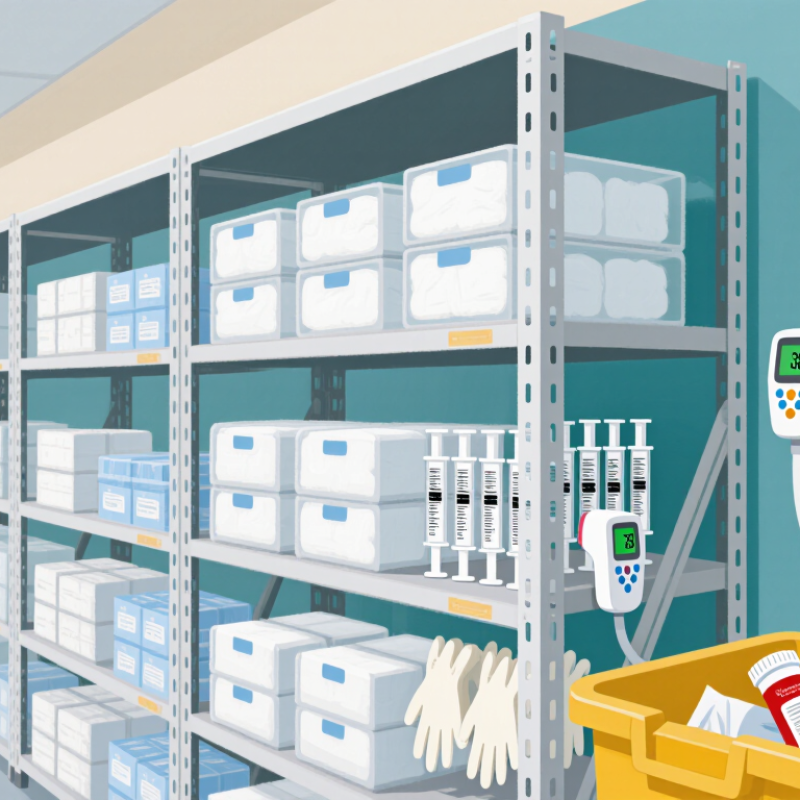
Medical consumables include sterile dressings, examination gloves, masks, syringes, and cleaning wipes. Their risk depends on intended use, packaging, and the consequences of contamination. Sterile items, such as sealed wound dressings, need intact packaging and clean, dry storage. A crushed seal changes the decision: set the item aside and follow facility procedures rather than guessing. Keep them off floors and away from sinks.
Nonsterile supplies, including some gloves and gauze, still need protection from dust, moisture, and handling damage. Some products also have temperature limits, so check the label instead of relying on a general storage rule. Short shelf life matters. Use dated stock in order, and separate expired or damaged items from usable supplies. Disinfectant wipes may dry out if containers are left open; a quick visual check can catch this.
A practical risk grouping is high, moderate, and routine handling priority, based on sterility and intended contact. It is useful, but imperfect: a nonsterile item can still be unsuitable for a particular task. Staff should follow product instructions and workplace protocols, record concerns, and ask a supervisor when classification is unclear. Small details matter. A tidy shelf is not proof of safe storage.
Storage Conditions for Medical Consumables in 2026
Medical consumables can lose quality when exposed to heat, moisture, sunlight, or dust. Storage needs vary by item, so follow the conditions printed on its packaging and the supplier’s instructions. Keep supplies in a clean, dry area with stable temperatures. A shelf away from windows, sinks, and heaters is often safer than a crowded cupboard. Check that packaging remains sealed and undamaged before use. Small details matter.
Tips: Use a simple thermometer to monitor room conditions, and record readings regularly. Keep stock off the floor and away from walls to support cleaning and airflow. Arrange items so older stock is used first, while keeping lot numbers and expiry dates easy to see. If supplies become wet, unusually warm, or damaged, separate them and seek guidance before use.
Handling practices deserve the same attention as storage. Wash and dry hands before touching clean supplies, and avoid placing opened packages on dusty surfaces. Take out only what is needed, then close containers promptly. A handwritten log may seem less polished than a digital system, but it can reveal recurring temperature changes. It is easy to overlook a sunny shelf during a routine check. Revisit the layout when seasons change or new supplies arrive.
| Category | Storage Conditions | Handling and Inventory Practices | Key Checks |
|---|---|---|---|
| General storage area | Use a clean, dry, well-ventilated area. Follow the product label and manufacturer’s instructions for temperature, humidity, light, and other environmental limits. | Keep supplies away from direct sunlight, water sources, dust, pests, and avoidable temperature changes. Do not store items in areas used for food or chemicals. | Record relevant room conditions where required by facility procedures or product instructions; investigate excursions that may affect product quality. |
| Temperature-sensitive products | Use the specific temperature range stated on the label. Some products require refrigerated storage, while others must be kept at controlled room temperature; requirements are product-specific. | Use monitored storage equipment when required. Keep products in their original packaging where appropriate, and follow instructions for transport and temperature excursions. | Review temperature logs and alarms. Quarantine affected stock after an excursion until its suitability is assessed using manufacturer guidance or facility policy. |
| Sterile supplies | Store in a clean, dry location protected from moisture, dust, pests, and physical damage. Maintain the sterile barrier packaging as supplied. | Handle packages gently. Do not use items with wet, torn, punctured, opened, or otherwise compromised sterile packaging. | Inspect packaging before use and check the expiration date or other shelf-life information provided on the product. |
| Moisture- and light-sensitive items | Follow product-specific requirements for humidity, light protection, and any desiccant or protective packaging. | Keep packaging closed until use when instructed. Avoid storing supplies near sinks, humidifiers, windows, or other sources of moisture or direct light. | Look for discoloration, corrosion, clumping, damaged seals, or other signs of deterioration; refer uncertain items for assessment. |
| Storage shelves and access | Use sturdy, clean shelving suitable for the item’s weight and storage conditions. Keep supplies off the floor and allow access for cleaning and inspection. | Separate supplies from walls or other surfaces when needed to prevent moisture damage and support cleaning. Do not block ventilation, exits, or safety equipment. | Check shelves for damage, leaks, dust, and pest activity. Store heavy items on lower shelves to reduce lifting and falling hazards. |
| Stock rotation and expiration | Organize stock so that product identity, lot number, and expiration information remain visible. | Use first-expire, first-out (FEFO) rotation. Place newly received stock behind earlier-expiring stock and separate expired or recalled items from usable inventory. | Conduct routine checks for expired, recalled, damaged, or obsolete products; document removals according to facility procedures. |
| Receiving and transport | Check that shipment conditions match the product’s labeled storage and transport requirements. | Inspect outer cartons and product packaging on receipt. Move temperature-sensitive items promptly to the required storage location. | Record receipt details and report damaged packaging, missing items, or suspected temperature excursions before stock is released for use. |
| Cleaning and stock separation | Keep storage areas clean and organized, with adequate separation between incompatible products and between clean stock and waste. | Follow facility cleaning procedures. Use designated locations for quarantined, recalled, expired, or damaged items to prevent accidental use. | Verify labels remain readable and that storage practices do not compromise packaging or product traceability. |
| Important qualification | There is no single temperature or humidity range suitable for every medical consumable. The product label, manufacturer’s instructions, applicable regulations, and facility policy take precedence over general guidance. | ||
Medical consumables need clear locations, intact packaging, and reliable expiry checks. WHO has cited estimates that roughly 50% of vaccines are wasted worldwide, often because of supply-chain and stock-management problems. That figure applies to vaccines, not all consumables, but it shows how costly weak inventory control can become. (WHO, Global Vaccine Market Report, 2022.) Store products according to their labeled conditions, and keep sterile items away from damp floors, sunlight, and damaged cartons. Small errors compound.
Use first-expiry, first-out rotation: place the earliest-dated stock at the front, and record lot numbers and expiry dates when receiving goods. Scan shelves weekly for items nearing expiry, then flag them for planned use or transfer under facility policy. Keep expired or compromised stock physically separate from usable supplies. A spreadsheet alone can look tidy and still be wrong. Staff should compare records with the shelf, especially after busy shifts or urgent restocking. CDC’s Vaccine Storage and Handling Toolkit emphasizes routine inventory checks and documented temperature monitoring for vaccines; those practices are useful models, but other consumables must follow their own storage instructions. (CDC, 2024.) I would not assume one checklist fits every department. Revisit the process when packaging, demand, or storage conditions change.
Safe handling begins before a package is opened. Check the label, seal, and expiry date under good lighting. Keep cartons off the floor and away from sinks, direct sunlight, and heat sources. Store items in clean, dry areas with clear separation between sterile supplies and general stock. Follow each item’s storage instructions; one temperature rule does not fit every product. Use clean hands, and wear gloves when the task or local procedure requires them. Small details matter.
At the point of use, inspect packaging for tears, moisture, or crushed corners. Do not use items when sterility or integrity is uncertain; isolate them and ask a supervisor to assess the next step. Open packs on a clean surface, only when needed, and avoid touching the parts that must remain sterile. Keep frequently used supplies within reach, but do not crowd worktops. That clutter returns quickly. Staff should know where to report damaged or expired stock, and records should make the item and location easy to identify.
For internal transport, use a clean, designated cart or closed container. Separate clean supplies from waste, used equipment, and personal belongings. Secure boxes so they cannot slide when the cart turns or crosses a threshold. Keep routes clear, and avoid leaving supplies unattended in corridors. Check the destination before delivery, especially when different rooms have different storage conditions. A checklist helps, but it can become a box-ticking habit; teams should occasionally watch the actual workflow and adjust steps that do not work in practice.
Inspect medical consumables when deliveries arrive and before use. Check seals, labels, expiry dates, and packaging for moisture, tears, or crushed corners. Compare temperature-sensitive items with the storage range on their instructions, and document any out-of-range readings.
Small gaps matter.
Keep records that connect each item to its lot number, receipt date, expiry date, storage location, and inspection result. Clear notes help staff spot recalls, investigate damaged stock, and rotate supplies by earliest expiry. Use a simple log that is easy to update during a busy shift.
A checklist helps, but it can become a ritual; staff still need to pause when something looks wrong.
Set questionable or expired stock aside, mark it clearly, and follow facility procedures and local requirements for disposal. Do not put potentially contaminated items into ordinary waste unless the applicable guidance permits it. Review disposal records periodically.
Even a tidy storeroom can hide a missed date.
Keep supplies in a clean, dry area with stable temperatures. Avoid windows, sinks, heaters, and dusty shelves. Small details matter.
Use a simple thermometer and record readings regularly. A handwritten log can reveal repeated temperature changes. It is not perfect, but it helps.
Keep items off the floor and away from walls. Leave space for cleaning and airflow. A crowded cupboard can hide problems.
Check the seal, label, expiry date, and packaging. Look for moisture, tears, or crushed corners. Pause if anything seems unusual.
Arrange items so those with the earliest expiry dates are used first. Keep lot numbers and dates easy to see. Easy to miss.
Record the lot number, receipt date, expiry date, storage location, and inspection result. Clear notes make damaged stock easier to trace.
Set questionable items aside and mark them clearly. Seek guidance before use, rather than guessing. That pause matters.
Follow facility procedures and applicable disposal guidance. Keep a disposal record and review it periodically. A tidy room can still hide a missed date.
This guide explains how to store and handle medical consumables properly by first recognizing that different supplies carry different storage and handling risks. Items that are sterile, temperature-sensitive, moisture-sensitive, or intended for single use may need distinct safeguards. In 2026, storage practices should follow each item’s instructions, with clean, dry, appropriately controlled areas, protection from damage and contamination, and clear separation of supplies when needed.
A reliable system also organizes inventory so staff can identify items quickly and use stock before its expiration date. Routine checks of packaging, condition, quantities, and dates help catch problems early. During use and internal transport, staff should use clean hands or suitable protective equipment, keep supplies in secure containers, and avoid handling that could compromise packaging. Accurate records support traceability, while expired, damaged, or otherwise unsuitable items should be separated and disposed of according to established facility procedures.

FoysMed Solutions